
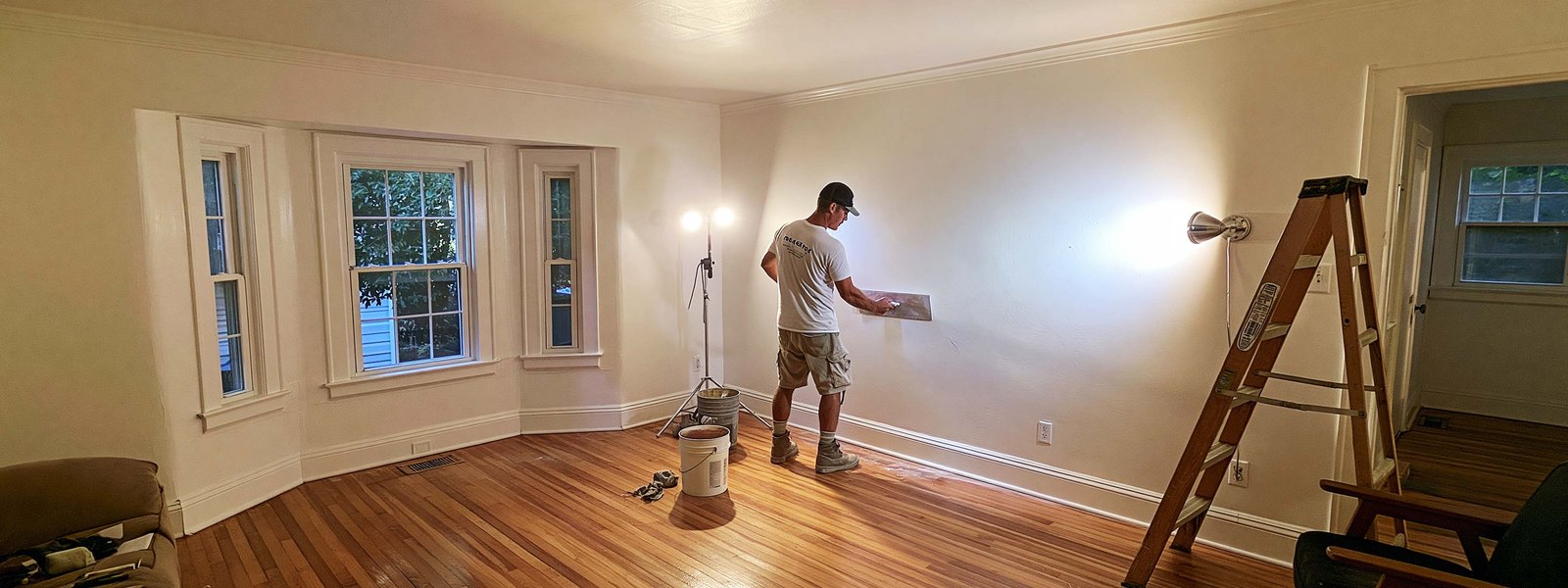
A plasterer skimming a wall in an older house, working under a portable light

Plaster and Lath Repair in Sacramento, CA

Old plaster mostly doesn't fail. It comes loose from what is holding it, which is a different problem with a much better answer.

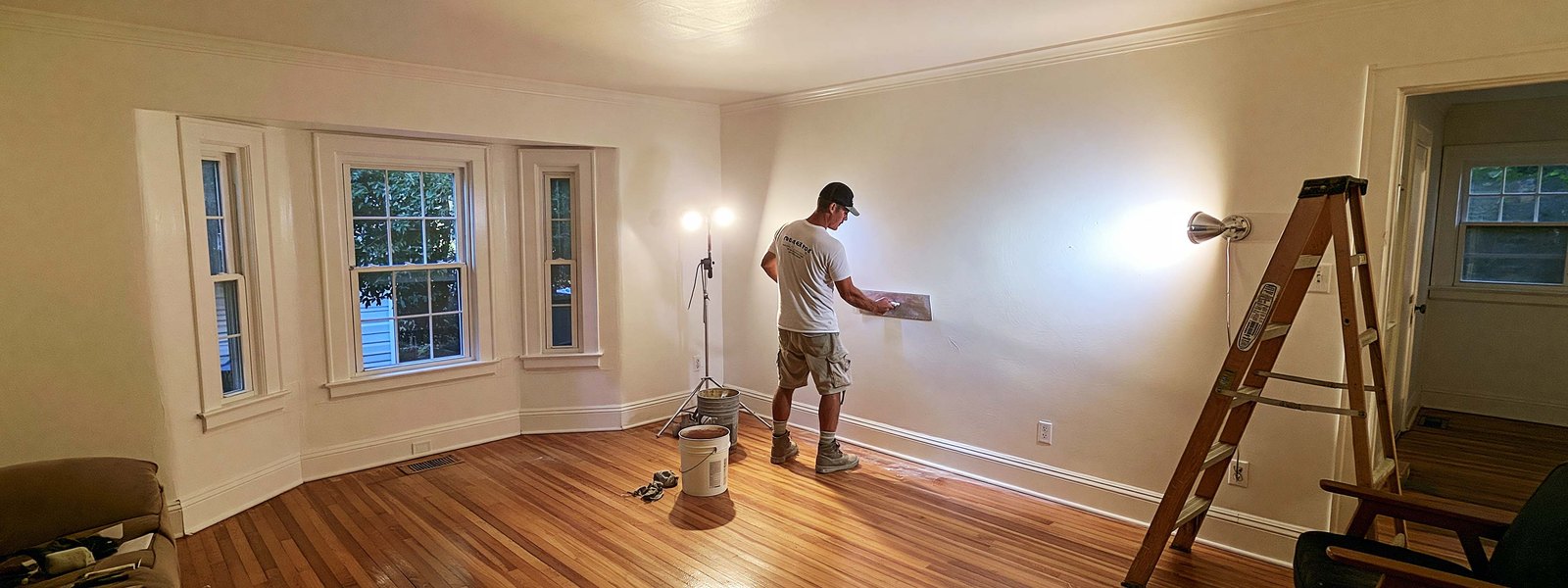
A plasterer working along a wall in a pre-war room with a bay window and wood floors

Press on the Wall Beside It

Put your palm flat on the wall beside the damage and press, gently, before Sacramento Expert Drywall or anybody else quotes you. If it moves in and springs back, your plaster is still sound and it has simply let go of what it was gripping. That gets re-secured. It doesn't get demolished.

Springy but whole means the grip has gone and the surface is fine. Solid with a crack across it means the house moved, and that's a repair. Crumbling to powder under light pressure is the one case where a section has genuinely failed, and a wide hollow sound means the grip has let go across more than one bay.

Most quotes we see for plaster repair in Sacramento price the demolition version, because it's faster to sell and faster to do. We'll price both and tell you which one your wall actually needs.

What Your Walls Are Actually Made Of

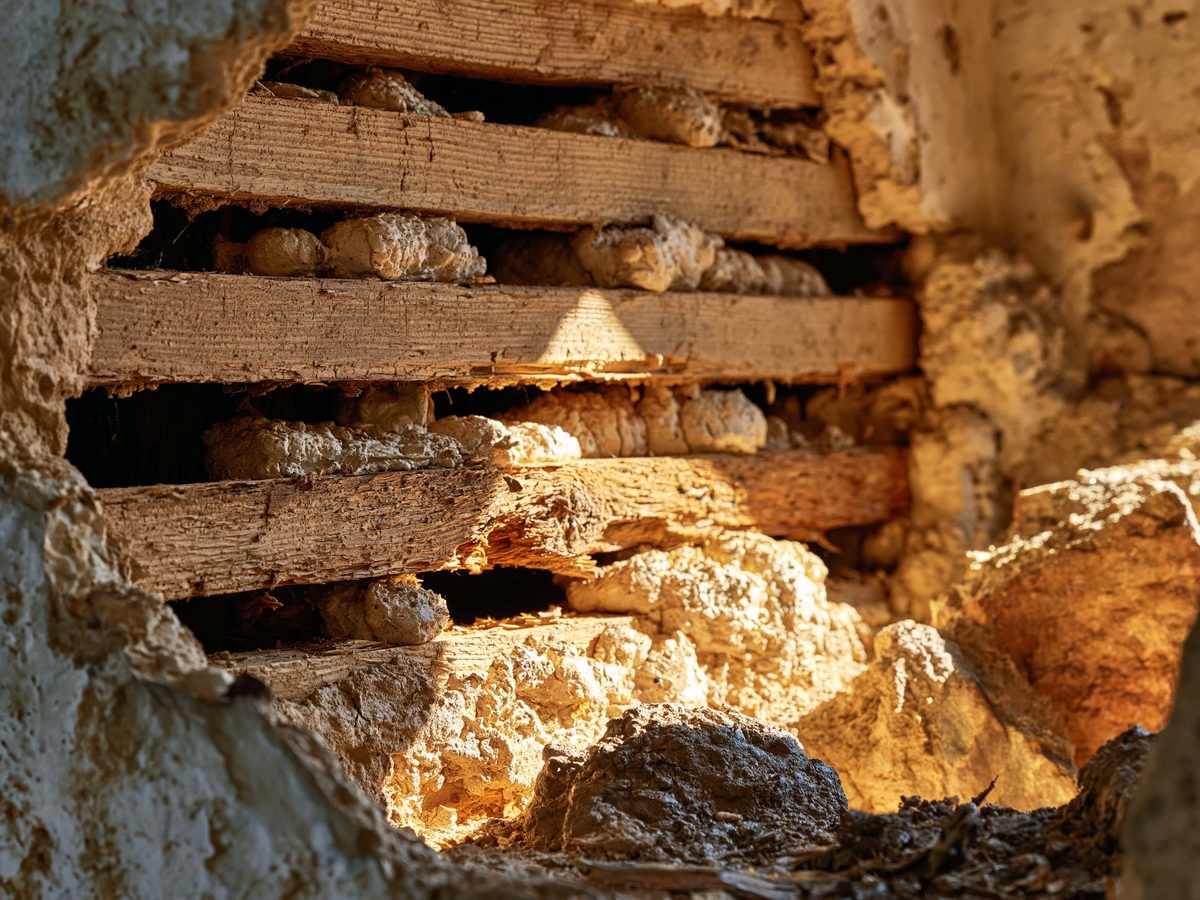
If your house went up before the war, your walls aren't one material. They're wood lath, thin strips nailed across the studs with a gap between each one, and three-coat plaster worked into and over them by hand.

The keys are the whole system

The first coat gets pushed through the gaps between the lath and squeezes out behind it, where it slumps and hardens into a ridge. Those ridges are called keys, and they're the only thing holding your wall on. Nothing is fastened. The plaster grips the back of the lath the way a hand grips the top of a fence.

So when a section fails, it's almost never the plaster that broke. The keys snapped off, a hundred years of vibration and shrinking and slamming doors at a time, and the plaster is now resting against the lath rather than hanging from it. That's why it moves when you press it.

Three coats, and the middle one is doing the work

The brown coat is the thick one in the middle, and in the oldest houses in this city it has horsehair mixed into it to hold it together. When people tell you they don't build them like they used to, this is the part they mean. It's genuinely stronger than what replaced it, and it's worth keeping if it can be kept.

What We Sound Out Before Any of It Comes Off

Whether your wall moves under a flat palm, which decides the whole approach
Whether the surface is sound or has started going to powder
How far the loose area runs past the visible damage, which we find by sounding it
Whether the lath behind it is intact, split or has come away from the studs
What the surrounding surface is, since some rooms were redone in later decades
Whether the damage follows a straight line, which usually means your house moved

Repair It or Replace It, and Why We Push for Repair

There's a version of this job that takes two days and one that takes a week, and the cheap one isn't always the good one. Here's how we think about it, standing in your room.

An opening in an old wall showing wood lath with the original plaster keys squeezed through and hardened behind it

Re-securing is the answer more often than not

Where the surface is sound and the grip has gone, we pull it back tight to the lath and hold it there. Then the damaged area gets rebuilt in a compatible material and brought back level. Your original wall stays. The room keeps its depth, its texture and the slightly uneven quality that makes an old house feel like one.

That last part isn't sentiment. A modern flat surface set into a hundred-year-old wall reads as a repair from across the room, and it sounds different when you knock on it. In a 1920s bungalow in Curtis Park, that difference is what a buyer notices.

When it does have to come out

Sometimes it does, and we'll say so. Widespread powdering, lath that has pulled away from the studs, or a ceiling already coming down are all past the point where re-securing is honest. Then we talk about what goes back, because a modern surface in a pre-war house has to be detailed carefully or your room loses its proportions.

Veneer plaster is the middle road, and plenty of Sacramento houses from the fifties and sixties already have it: a thin, hard skim over a backing sheet. It behaves more like the original than a modern surface does, and in a historic house needing a whole wall rebuilt it's often the right answer.

What Decides Your Price

The visible damage tells us very little. What decides your price is how far the loose area runs past it, and we find that by sounding your wall, not by looking at it.

After that it's what has to be worked around. Original trim, picture rails and plaster molding all get protected and cut around, and that's slow, careful work. The care that keeps an original room looking original is most of what you're paying for here.

Living in the House While It Happens

Old plaster is dusty work and there's no version of it that's not. What changes is how much of that dust ends up in the rest of your house.

What we set up before any of it comes off

  • Plastic across your doorway, sealed, not draped over the opening
  • Floors covered wall to wall, because old fir marks and doesn't sand out
  • Original trim, picture rails and molding protected before anything is cut
  • A route out for the debris that doesn't cross the rest of your house
  • Power off to the room if the damage is anywhere near a fitting
  • Somewhere for the material to go, since old plaster is heavier than anybody expects

The room gets closed off, properly

Everything that can leave the room leaves it, and what stays gets covered. In a 1930s house with original floors that's not a nicety. Old plaster comes off in lumps, and a lump of the brown coat dropped on soft fir leaves a mark you live with.

Drying time is longer than you expect, and that's normal

New plaster work has water in it and gives that water up slowly. A repaired area has to dry properly before anything goes over it, and rushing it is how a repair comes back cloudy or cracked at the edges. In a wet Sacramento January, add days, not hours.

We'll tell you at the estimate how long your room is out of use, and we'll quote you the honest week over the optimistic three days.

Is my house old enough to have plaster?

If your house went up before roughly 1950, almost certainly. The pre-war neighborhoods in the core grid, the older parts of East Sacramento, Curtis Park, Land Park and Oak Park among them, are largely wood lath and three-coat plaster. Anything later is mostly modern surfaces, with veneer plaster turning up in the fifties and sixties.

Can you tell plaster from a modern wall without opening it?

Usually, in a few seconds. Plaster is thicker, harder and colder to the touch, and it sounds solid, never hollow, when you knock on it. Push a pin into an inconspicuous spot: if it goes in easily, it's a modern surface, and if it stops dead, it's plaster.

Should I just replace it all with modern material?

You can, and we'll do that work properly if it's what you want. Worth knowing first: it's usually the more expensive route rather than the cheaper one, and the rooms feel different afterward. In an older house that's worth sitting with for a week.

Why does my plaster crack in the same place every year?

Because something in the house moves with the season and your wall is the stiffest thing in the room. A hairline that opens and closes on a yearly cycle isn't a failure of the plaster and re-doing it won't stop it. We'll show you what we think is moving before we suggest anything.

Do you match the original texture?

We bring the repaired area back to the same surface and the same level as the wall around it, worked by hand the way the original was. Machine-applied finishes sit differently on an old wall and the eye picks it up. If your walls have a distinctive hand-worked surface, tell us when you call.

Will my room be out of use for a week?

A contained area is usually two to three days including drying, and a full room is a week or more. The variable is the drying, not the work, and winter here's slower than summer. You get the schedule before we start.

Texture Matching

Getting a repaired surface to disappear into what surrounds it.

Read more →

Drywall Repair

The same problem in a modern house, where the walls fail differently.

Read more →

Ceiling Repair

Overhead work, where old material has gravity working against it.

Read more →

Drywall Patching

Smaller damage in a modern wall, closed and finished.

Read more →

Roseville

Where the older downtown grid meets a lot of much newer building.

Read more →

Carmichael

Post-war ranch stock, and the older properties scattered among it.

Read more →
An older couple sitting with coffee in the window seat of a craftsman house

Get Your FREE Estimate

Ask us whether your plaster is worth keeping. The answer is usually yes, and asking is free.

You keep the original walls, in the house that came with them.

Call Us Now! 916-584-9660